HOMILY Easter Sunday April 5, 2026
Easter Sunday is resurrection day! We have reached the end of our Lenten journey. On Friday, Jesus’ death on the cross, the blood that was shed at Calvary, sealed the new covenant. But it is the resurrection on Sunday that gives us the promise of eternal life with him in the Kingdom. A lot can happen in three days. Jesus’ death and resurrection changed the world.
The resurrection was foretold in Psalm 16 when David wrote:
I have set the Lord always before me; because he is at my right hand, I shall not be moved. Therefore my heart is glad, and my glory rejoiceth; my flesh also shall rest in hope. For thou wilt not leave my soul in Sheol, neither wilt thou permit thine Holy One to see corruption.
The Holy One of course is our Lord.
But people questioned the resurrection. Paul told the Corinthians, that if Christ had not risen from the dead, then his crucifixion was for nothing. Without the resurrection, a person’s faith would be futile, and the burden of sin would still be on them. Paul’s logic is clear and his conviction is firm. The resurrection is the reality that underscores all of his letters, it’s the foundation of his ministry. It’s his belief, and our belief too. The risen Christ spoke to him directly on that day on the road to Damascus. It was so impactful that a hard bitten persecutor of Christians became Jesus’ greatest champion. He never met the human Jesus, but he sure did meet the risen Lord. And so Paul speaks to us across the millennia, with authority and truth. The resurrection was the core of Paul’s faith, and it is also the core of our faith as Christians. It’s written down in the creed that all Christians declare:
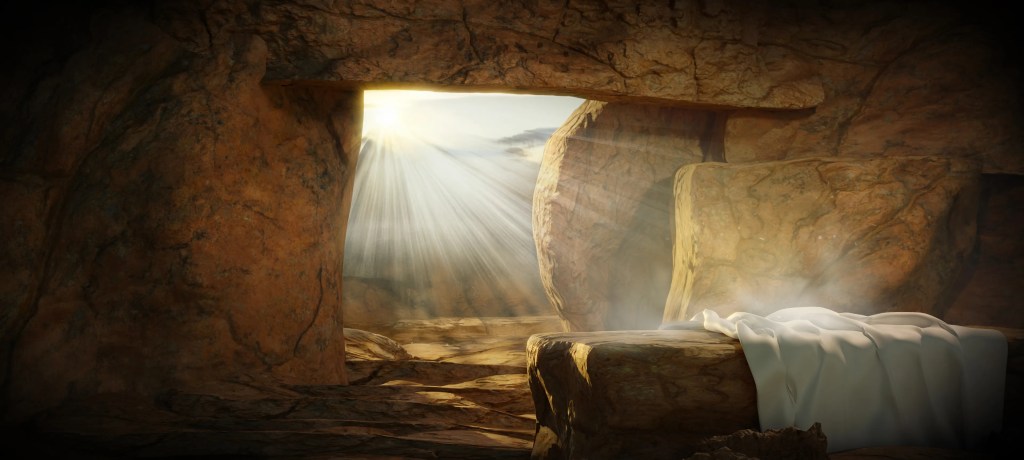
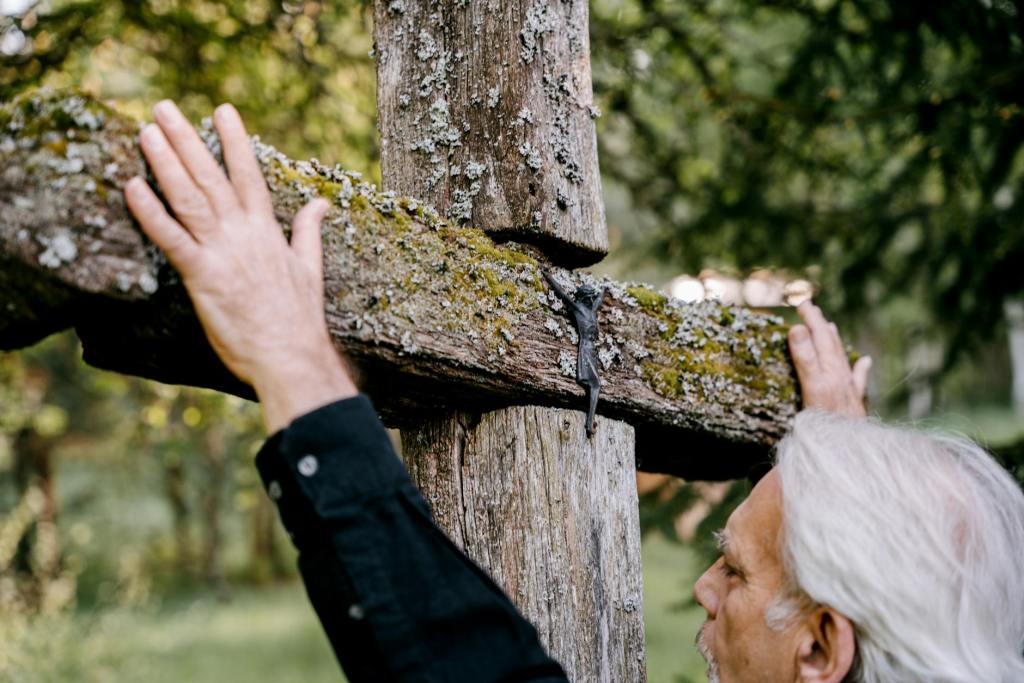
Jesus was crucified, died and was buried. On the third day he rose again, in accordance with the Scriptures. On the third day he rose again. That is the heart and soul of our faith. There, before us is the empty cross. On the third day, that tomb was empty.
Jesus told his disciples exactly what was going to happen to him in Jerusalem, that he would suffer many things, that he was going to die and that he would be raised up again. In Mark 9:30–32, he said to them, “The Son of Man is going to be betrayed into the hands of men. They will kill him, and after three days he will rise.” But they did not understand what he meant and were afraid to ask him about it.
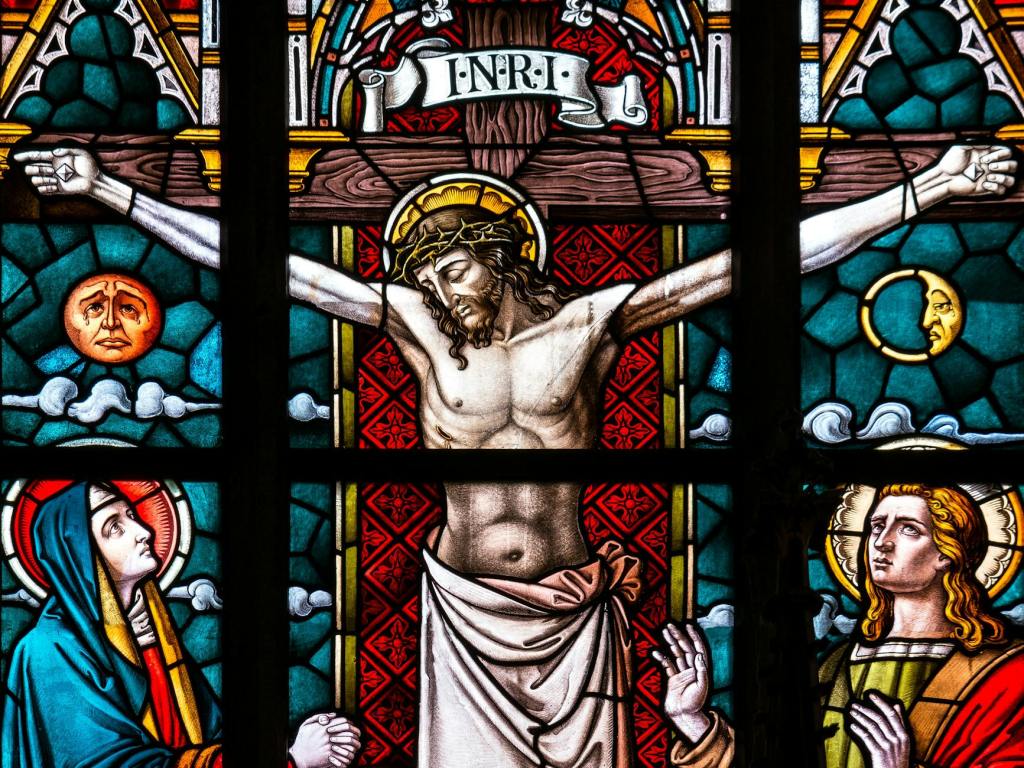
The reading from the Gospel of John that we’ve just heard explains what happened that Easter Sunday morning when the empty tomb was discovered, but what happened in between the crucifixion and the resurrection is something of a mystery. We know that Jesus was certainly physically dead in the way that we understand death. He suffered agonising torture, the scourging, the crowning with thorns, the nailing to the cross. On the cross he said “it is finished,” and he gave up his spirit. Finally the soldier pierced his side with a spear to make sure that he was dead.
They laid him in the tomb and rolled the stone over the entrance, the authorities even posted a guard at the tomb to prevent anyone tampering with the body. In the reading, John mentions little details that he saw in the empty tomb; the strips of linen that had wrapped Jesus’ body were there, and the face cloth too, but they were separate from each other. The discovery of the empty tomb, with the details of what was seen that morning, build up to an unmistakable reality. It reads like a news report that could only point to one thing. Jesus was no longer dead.
But what happened during those three days? What did Jesus accomplish during that time when his body lay on the cold stone of the tomb. What happened on the Saturday?
In Matthew chapter 12, Jesus predicted this day, he said, “Just as Jonah was three days and three nights in the belly of the great fish, so will the Son of Man be in the heart of the earth.” And if we read Jonah’s prayer he says: “Out of the belly of Sheol, I cried, and you heard my voice. . . . I went down to the land whose bars closed upon me forever.” Not only did Jesus take on our suffering and death, but he also shared the fate of the souls in Sheol. Sheol is the Hebrew name that refers to the land of the departed. He experienced the lonely darkness of death that was humanity’s lot after the fall. So great was his love for us, and so great were the lengths that he went to in order to completely share our humanity.
It’s been mentioned thirty five times in the New Testament that Jesus was raised “ek nekron,” which translated from the Greek means “out from the dead,” out from the place where the righteous souls resided. Jesus was not rescued immediately during those days in which he was in the grip of death; his soul remained in the realm of the dead while his body lay in Joseph’s tomb.
While it’s true that the details of what happened to Jesus in the tomb can only be speculation, we can still reach an understanding of the person and work of Jesus in this time of waiting. And there is an overwhelming sense of the passage of time. His loved ones felt it deeply. When Jesus died, there would have been intense grief, anxiety, and confusion. Such a shocking event needed to be processed, and this waiting was a time in which those left behind had to emotionally and mentally come to terms with what had happened. Jesus was dead… could this be the end of everything? It was as though his promise of rising on the third day hadn’t registered.
They waited, but without any hope.
This time of suspended action is reflected in how we ourselves deal with the reality of death and the impermanence of our physical existence. Even if our faith is strong, we still experience the pain of separation, there’s a significant interruption. We still wait for our loved one to return, even though we know that in this life it is impossible; we wait for reunion and hope that there is more than just a void. And this is what the disciples went through; they reacted to Jesus’ death as if it were permanent. And for those who are not believers, who do not have the hope that the resurrection gives, this pain and grief is a constant reality, without relief. They stare at the void, without consolation, and the wait is endless.
But there is indeed hope present in those three lonely days, and the key is in Psalm 139 which says, “Where can I flee from your spirit? If I make my bed in Sheol, you are there.” When Jesus descended to the dead he brought with him the light of his being and conquered the darkness of unknowing, he vanquished death, and killed the fear, the hopelessness and the gloom associated with the end of life. This is the great gift. And Just as he took our sins upon himself, Jesus took all our lonely dying as his own.
The resurrection affirms the truth expressed in Psalm 139 where it is written, “even darkness is not dark to you.” Death is not permanent, and what was a dreadful interval ended with the opening of the door to new life and the joy of that first Easter morning. We can imagine Jesus returning from the darkness of death. Raising himself up from the stone platform, uncovering his face, and removing the grave clothes, and setting them down again. And then bursting back into the world and praising the Father as he had always done before.
Jesus’ resurrection isn’t just a historical event that happened all that time ago, it’s also a present reality that transforms lives. Through his resurrection, Jesus liberated humanity, and overturned the sin that had kept people enslaved. The author J. R. R. Tolkien, a devout Christian, who wrote the Lord of the Rings, coined the term “eucatastrophe.” A eucatastrophe is defined as a “good catastrophe,” it means a dramatic and unexpected event in a story that leads to the avoidance of a tragic end. Tolkien said that the resurrection was a eucatastrophe, an event of such good and cataclysmic power that it had the capacity to renew the whole of creation.
When Jesus walked out of the tomb, our fallen world was conquered by heaven.
A lot happened in those three amazing days: our grief was turned to joy, our suffering humanity was healed, fear was dispelled, and now we can look forward to spending the whole of forever in the loving embrace of Jesus our Saviour. Amen.


 Tell Out My Soul
Leave a comment