Lk 10:1-11, 16-20
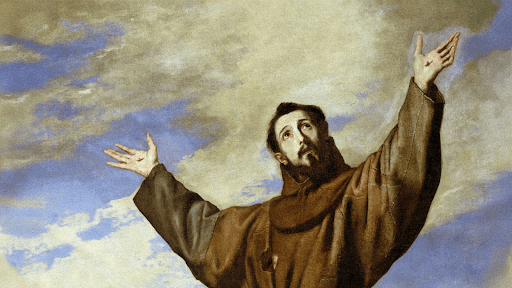
In the Gospel reading from Luke we hear about how Jesus sent out a group of seventy of his disciples to preach the Good News. It’s called the Great Commission and this story has influenced many people in history, most notably, a young man who lived around the turn of the 11th century in Italy. His name was Francis of Assisi. In the history of Christianity, there have been many saints, about ten thousand at the last count, and Francis of Assisi is arguably the most exceptional. He took from the Gospel what was good and true and pure, and was able to reform a whole church. He saw the essence of Christ’s message, the literal truth, and taught it without any frills. And he was able to communicate to the church hierarchy what this meant in real life terms, and they listened to him. He was radical, and many at the time thought he was a little crazy.
But if he was judged to be a little mad, it was a madness born out of a deep love of Christ which he demonstrated most of all in his actions. He rebuilt crumbling churches and chapels with his bare hands, he refused to take money, or own property, he served the poor and the sick, ignoring his own physical needs and often his own health. He walked the walk, as they say. He did exactly and without hesitation, everything that Jesus wanted him to do, and this applied also to his followers and the monks who dedicated themselves to this way of life. Assisi in the Middle Ages was a decadent city; the middle class was showing off its new found wealth and living high off the hog, but Francis chose to turn his back on this life, and followed the way of our Lord, the way of the poor and the meek. And when the people looked at his behaviour they were astonished. Here was this privileged and spoiled rich kid from a well to do family, living and looking like a beggar, of course they thought that he’d slipped his moorings. And yet others were attracted to him and his simple and seemingly naive approach to his faith. Instead of staying away from him, the community came forward to help him, with donations of food, clothing and building materials, and they grew to admire and love him.
In Matthew 10:7 Jesus said, “Preach as you go, telling them that the kingdom of God is at hand.” And this is what happened in Assisi; time had rolled back 1200 years in the “Galilee of Italy.” The Good news was being preached again in villages, hills and farms. Francis and his fellow monks advised the people to love and fear God, and to repent of their sins. They went out two by two with great joy and singing. They went without money, without provisions, just as Jesus had commanded the first disciples to do.
What Jesus asked his disciples to do was as radical then as it is now. They had no protection, no change of clothes, no food and no money. Did Jesus think that money in principle was a bad thing? Has it been a bad thing? Maybe not. So what was Jesus’ reason for sending them out without anything, so vulnerable and unprotected? It was to make them wholly and solely dependent on God. It was to get them out of the mind set of thinking that they knew what was best. God is always in charge. As soon as we think we’re in control, then that’s when the wheels fall off. So this was total surrender, the disciples were trusting in God and allowing God to work through them. Just as God works through each and every one of us.
We may not realise it, but he has called us all by name, each one of us; that’s why we’re all gathered here today. You are his, and he has a plan for you, just like he had a plan for the twelve and the seventy and all the others, including Francis. It’s not random that you’ve have been called, it’s by God’s grace and intention that you are on this path, and that you’ve decided to follow Jesus. Francis was very literal in his approach to what he thought God was calling him to do. He took that passage from Luke and he went off and did exactly that, because he really felt that it was what God wanted him to do. And Francis never shirked or softened his approach, he followed Jesus’ commands until the day he died, and always with great joy and love for our Lord; that was the thing that attracted others to him.
So what is our mission? How do we know what God’s will is for us as individuals? It would be nice if it was as simple as that 60s show Mission Impossible when Jim Phelps turns on the tape machine and listens to the recorded message saying, “your mission Jim if you choose to accept it” and then it would describe the mission and self destruct in ten seconds. But we don’t have that.
To know what our mission is we need to look into ourselves to understand our own feelings and we need to listen to the whisperings of the Spirit. Only then can we realise what we can do to carry on what Jesus began. We follow the leanings that God has put inside us from the beginning, the yearnings and promptings of our hearts. We do what we feel drawn to do by God. We’ll know deep down when he calls us by name; and we follow his voice because we love him. We can also pray to God asking him, “Dear Lord, what should I do, to carry out your will for me?” God will always answer this prayer. All we need to do is to keep an open heart and a mind focused on the Lord, undistracted by our own selfish desires and wants, and then our path becomes crystal clear, sometimes it dawns gradually, and sometimes in a flash.
Every day God sends each and every one of us out to do his work in the world, and it’s an ongoing process. You can’t look at the state of the world today, with the violence hate and division and say, well, Jesus died and rose again, job done, and just wait patiently for Jesus to come back. We’re on the self same mission as the disciples at Pentecost, spreading the Good News. Pentecost is real for us too. Some days we can feel the fire of the Holy Spirit, and some days not so much. We may not have the power to work miracles, but we can all still be greatly effective in doing God’s work.
God the Father connects with Jesus who in turn connects with those he sends, and that includes you and me, and then we connect with everyone else. In John 13:20 Jesus says, “I tell you the truth: whoever receives anyone I send, receives me also; and whoever receives me, receives him who sent me.” How special is that? What a wonderful part we’ve been given in God’s plan for all humankind. We are a link in this chain.
Jesus says, “Truly, truly, I say to you, whoever believes in me will also do the works that I do; and greater works than these will he do.”
What did Jesus mean by greater works? Jesus did some pretty amazing things, he raised Lazarus from the dead. We haven’t been able to do that. What I think he meant was not the nature of the works, or the quality of the works. What I think Jesus meant by greater works, was in the quantity of the saving works, the sheer number of people turning to Christ. We can have so much influence on so many people today. Evangelists, teachers, preachers, bloggers, you tubers, have the capacity to touch so many lives and turn others to God, and renew people’s faith.
On the first Pentecost day, 3000 people were brought to Christ. Today, Christianity is followed by 2.4 billion people, and it’s the main religion practiced throughout the Americas, Europe, Oceania and sub-Saharan Africa. That’s about thirty percent of the global population. Jesus understood that his followers, over the course of time, would have an amazing impact, a greater impact on the hearts and minds of people. Today, the power of the internet alone in spreading the good news is extraordinary. Jesus is all over the internet. If you Google the search terms “Jesus Christ,” you’ll get around 400 million results!
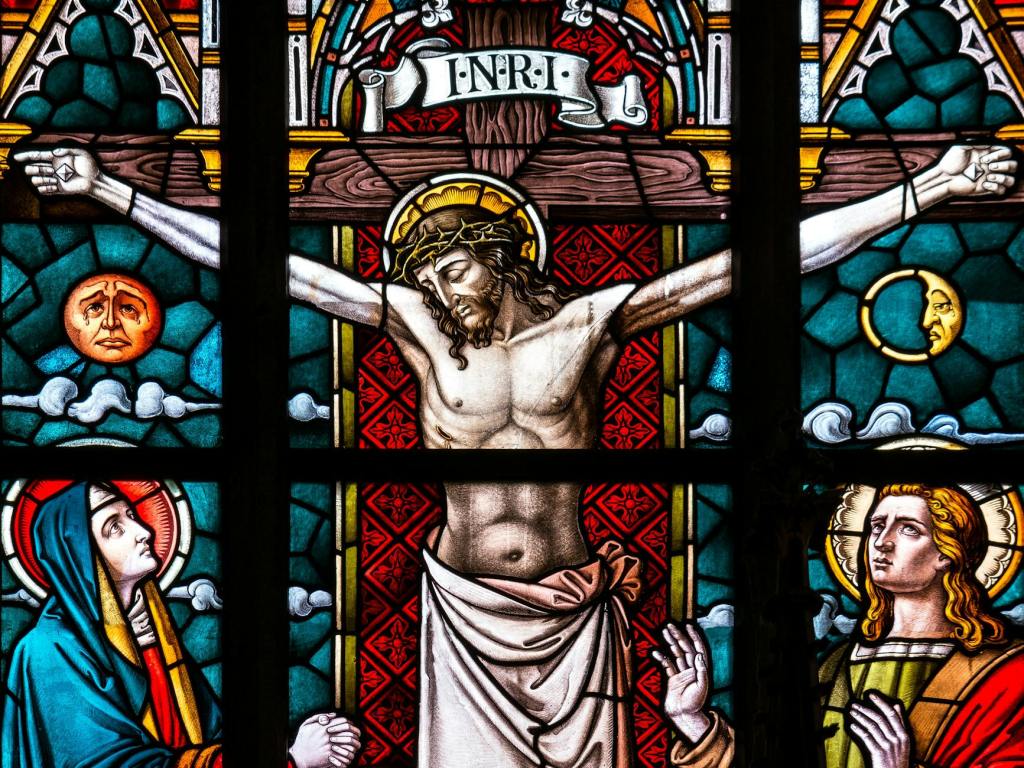
The word is out there, but the main obstacle to people receiving the word is indifference. We can think about the scene of Jesus’ crucifixion, and the attitude of people watching. There were people there that were indifferent to Jesus’ suffering and the purpose of the Cross, and people are still indifferent. This is what Billy Graham had to say about it, he said: “the mockings, the abuse and the atrocity of that ancient pagan mob were less painful to Christ than the indifference of a modern world on which the light of the Gospel has been shining for all these years.” When I heard that, it really hit home.
But we have the fire of the Holy Spirit inside us, we are extraordinary, all of us in our own ways. We have been touched by the Spirit, and every day is Pentecost day. We often bemoan the fact that Christmas is just one day of the year, and we say, “why can’t everyday be like Christmas, full of good will and cheer, giving and sharing every day, not just one day a year.” But the power of Pentecost is there each and every day for us as followers of Jesus. It’s a flame that never goes out, an eternal flame of love, and it’s up to us to let it shine forth so that others can see it, and feel its warmth and consolation. This is our calling and this is how we overcome the indifference of the world. Jesus said in John 12:32, “And I, when I am lifted up from the earth, will draw all people to myself.” He was talking about being lifted up on the cross at Calvary. As he was dying, he said, “it is finished.” Yes, his earthly strivings had ended, but his mission didn’t stop when he was lifted up and died on the cross; we’re taking up the work now. He wants all people to be drawn to him… all people, and that’s the mission that he set for us, to be the ones who draw others to him.
The cross of Jesus is the only way that we can bring others to an understanding of Jesus and what he means to the world. We do this by taking up our own crosses and following Jesus and serving Jesus, carrying on his works of love, and helping him to satisfy his deep desire to bring all his children home. And how good does it feel when we know that what we do or say has the possibility of connecting other people to God so that they too can have what we have: that certainty, that faith and the love that makes our life complete in Jesus our Lord.
Amen and God bless you.




 Tell Out My Soul
Leave a comment