Lk 6:17-26, Jer 17:5-10, 1 Cor 15:12-20
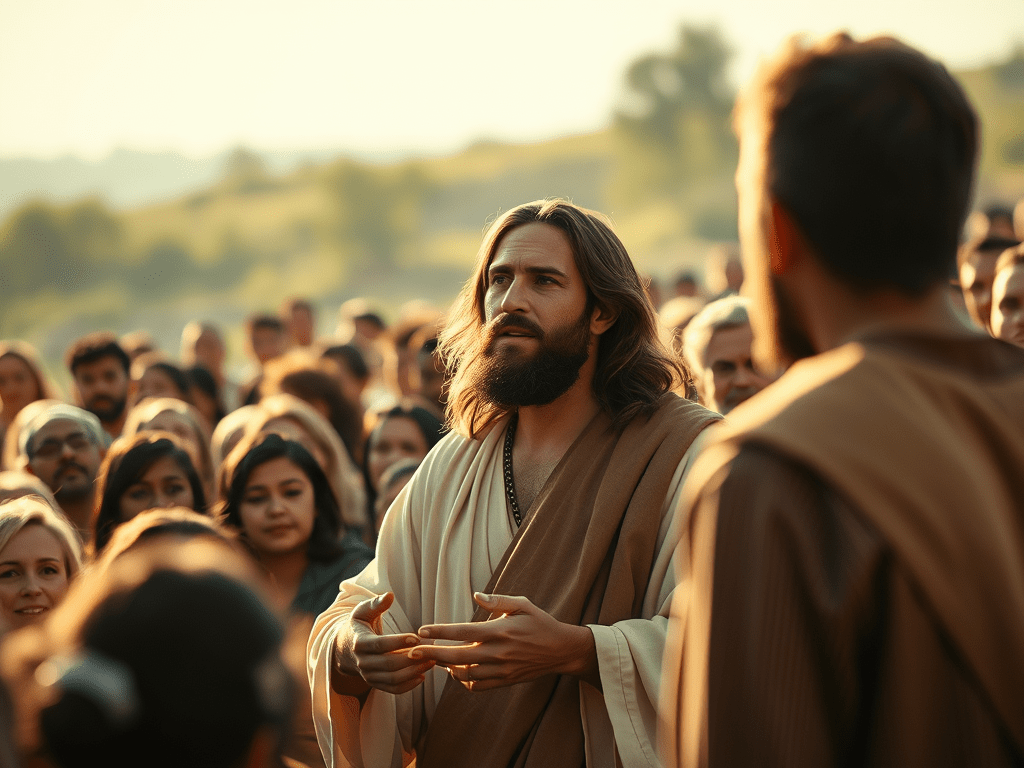
Today’s reading from Luke describes the Sermon on the Plain, which is similar to the Sermon on the Mount. Jesus delivered both of these sermons early in his ministry while his disciples were still new, and the crowds at these sermons were huge. His message is timeless and not only did it speak to his first century listeners but also to us today.
We can’t underestimate how important Jesus’ influence was back then. The world wasn’t as populated as it is now, so to get a crowd of thousands together would have been unheard of, especially when we think that people had to travel mainly on foot to get to where Jesus was. They came to hear his words, and to be healed, and Jesus didn’t disappoint them. He preached about the big things, not about the details of the Law like the Pharisees liked to do. He talked about God, eternity and salvation, and he gave hope to the sick, the poor and the suffering.
Two thousand years ago was not a good time to be sick, not only did these people suffer because of a lack of medical care, but they were also isolated and ostracised. When a person was struck down with something, the general belief was that they were being punished by God for something that they had done wrong. People these days like to call it karma, what goes around comes around. But God doesn’t operate in this simplistic way. He is a just God, but he is also infinitely merciful.
I imagine that for the majority of the people gathered on the plain, this was the only opportunity they would have had to hear a spiritual message. Going to the synagogue or the temple was not a frequent thing, there were so many restrictions on who could enter the temple and hear God’s word. But here was a man, a teacher, the Messiah, speaking and connecting to them personally, with love. He acknowledged them and invited them into a personal relationship with him and with the Father.
The reading tells us that power was going out of him and into the crowd. The power of God was real and evident through the person of Jesus. It was an energy, and we’re made aware of this in the situation when Jesus was on his way to Jairus’ house. On the way the crowds were pressing in on him, but a woman who had been suffering with a haemorrhage for many years managed to get close to him and touch the fringe of his robe. And at that moment, she was instantly cured, and Jesus felt the power go out of him. He seemed almost startled, and wanted to know who had touched him. He praised her for her faith, and called her “his daughter.” It’s a beautiful example of the healing power and mercy that Jesus gave out (Mark 5:25-34)
This type of communion had never happened before, no wonder people came from miles around just to be near him. There on the plain, God was present for everyone to see and feel and experience. They weren’t imagining it, and it’s no wonder that the temple authorities were worried.
His sermon is separated into two parts, called the blessings and the woes. And he talks about two different groups of people. While he seems to separate the two groups on the basis of their situations, like rich and poor, happy or unhappy, the actual distinction Jesus is making is between the blessed and those who direct their desires and drives away from God.
In today’s reading from Jeremiah it says: Blessed are those who trust in the Lord, whose trust is the Lord.
Firstly Jesus talks about the blessed. In the English language there are two pronunciations of this word spelling, bless-ed and blest. Bless-ed is an adjective, it describes something as being bless-ed or holy. It’s a state of being or a quality of something. The quality of being holy. Blest on the other hand is a verb, it’s something that happens to something or someone, for example, “the priest blessed the man’s bible,” or “God has blessed the family with many children.” Someone can be blessed with something, like a good memory, but that doesn’t make them bless-ed.
When Jesus says bless-ed are you who are poor, he’s saying that these people are in a state of holiness, not because they are poor. It’s the other way around, being poor goes along with them living in a bless-ed, or a holy state. Why is someone poor? Maybe because they love God more than money, maybe because they share what they have, maybe because they weren’t willing to sacrifice love of family to go out and spend all their time making money. Possibly they put others before themselves. It’s the quality of being bless-ed that sometimes results in not having a lot, or going hungry, or going without.
The bless-ed poor are the ones who are poor but remain in a state of righteousness. Being poor in some cases is a natural consequence of holiness. An obvious example is someone like St Francis; his poverty was a result of his devotion to God above worldly things. He came from a wealthy family but renounced his riches to follow Jesus.
There may be saintly rich people in the world, but Jesus tells us, “Assuredly, I say to you that it is hard for a rich man to enter the kingdom of heaven.”
Jesus tells us that those who weep are bless-ed too. These people weep for the world, for the sadness inherent in seeing the suffering of others. Their feelings run deep. And when they suffer a personal loss, their grief is offered up to God, not turned inwards, which would only make them bitter and resentful. Pain in this case is a result of tender-heartedness. This kind of open hearted suffering draws one closer to God, the source of all comfort. The bless-ed who suffer and who weep, do not have self-pity and they don’t bring others down, they certainly don’t blame God, but instead seek God even more ardently.
The good news that Jesus is telling these bless-ed people is that their hunger, poverty and pain are temporary; their reward will be great in the kingdom, and what they are going through will be reversed. Their tears will be wiped away in due course, and in the natural order of things according to God’s will.
The bless-ed are those people whose hearts and minds are directed to God, and, in a way, the kingdom is already theirs, in the here and now, but their joy will be complete when they meet God face to face and their earthly shackles fall away.
Then Jesus talks about the woes. Woe to you who are rich, or full or laughing now. To seek all your happiness and satisfaction just in the things of this world is a delusion, and if you attach yourselves to this delusion, then when all these things are taken away, when they don’t count any more, then we you be left empty handed.
This situation is expressed so well in Harry Chapin’s song from 1974 called, Cat’s in the Cradle, I’ll just read some of the lyrics:
“My child arrived just the other day, he came to the world in the usual way. But there were planes to catch, and bills to pay, he learned to walk while I was away.”
It’s about a man who is completely focused on work and earning money. The result is that he doesn’t pay attention to his family especially his son who he doesn’t spend any time with. And then when the dad’s retired and wants to spend time with his son, his son says he’s sorry but he’s got other things to do. He doesn’t have his son’s affection because he didn’t nurture that affection when the boy was growing up. And the sad irony in the song is that the son turned out just like his dad.
We mustn’t do this with God. If we do not nurture love of God in our lives, the when these material things are taken away, either by retirement, death, a change of circumstance, or whatever, when we discover that these things don’t matter, or we just don’t want them anymore, then what are we left with? Jesus tells us that all the earthly things that we desire in this world are temporary.
In Matthew’s Gospel Jesus says, “Do not store up for yourselves treasures on earth, where moths and vermin destroy, and where thieves break in and steal. But store up for yourselves treasures in heaven…For where your treasure is, there your heart will be also.”
The state of blessedness that Jesus talks about in the Sermon on the Plain means that a person’s heart is with God. Our relationship to God is the one thing that cannot be taken away, it’s eternal, because God is eternal, ever new, ever vital, ever present. There will never be a void in our life if God is in it. There will never be hunger or thirst. When God is there, all other things become pale in comparison. That is the state of blessedness that is the key to the kingdom.
In God’s kingdom. There won’t be fine wine, or gourmet food, there won’t be flashy cars, or diamonds or gold, there won’t be fame or a fat bank account. There’s no money in the kingdom of God. So if these are the things that a person loves, it will be impossible for them to find satisfaction in the kingdom. When this person is finally called, and Peter flings open the pearly gates, they’ll take one look inside and say, “oh, is that all there is, just God? I’m not really happy about this at all.”
In the kingdom, God will be our portion and our reward, but we need to act on that knowledge now. God needs to be our one desire in this life. and if we fill ourselves up with God now, will be made complete when we see him face to face, and we will have God to overflowing.
The other thing that Jesus talks about is rejection and acceptance. Being accepted and praised for the wrong reason, like being wealthy or famous, does not impress God. He’s not going to say, well you had the biggest bag of marbles, or you developed the V2 rocket, or you invented the production line, good for you. He looks at the people that are being persecuted and rejected and scorned by society for doing his work. They will be praised by God himself. Earthly praise is not worth anything, it’s the approval of God the Father that is the brass ring that we should be going for.
The true prophet is persecuted in this world. It is inevitable that those who stand for God’s truth will have enemies, because the wicked will want to tear them down. It’s the false prophet, the fake virtue, that is easily accepted. And that includes shonky televangelists, all show and no substance, who are only motivated by profit. It’s the rich and famous who get trotted out by the mass media. It’s these shallow glamorous and often godless individuals that the majority of people admire and praise.
So Jesus tells us that If your good works aren’t recognised and if you are persecuted for following him, that’s fine, that’s what happened to all the true prophets, be glad about it even. Wordly recognition and adulation will mean nothing in the kingdom.
Jesus makes some serious promises in the Sermon on the Plain, and the reason he does so is found in today’s reading from Corinthians. Paul says that if Christ hasn’t been raised then everything is futile, but then he states, “But in fact Christ has been raised from the dead, the first fruits of those who have died.” Paul describes Jesus as the first fruits. These are the first yield of the harvest to be offered to God in obedience, reverence and thanks. Of all who went before, the only begotten Son is the one worthy to be offered up to God.
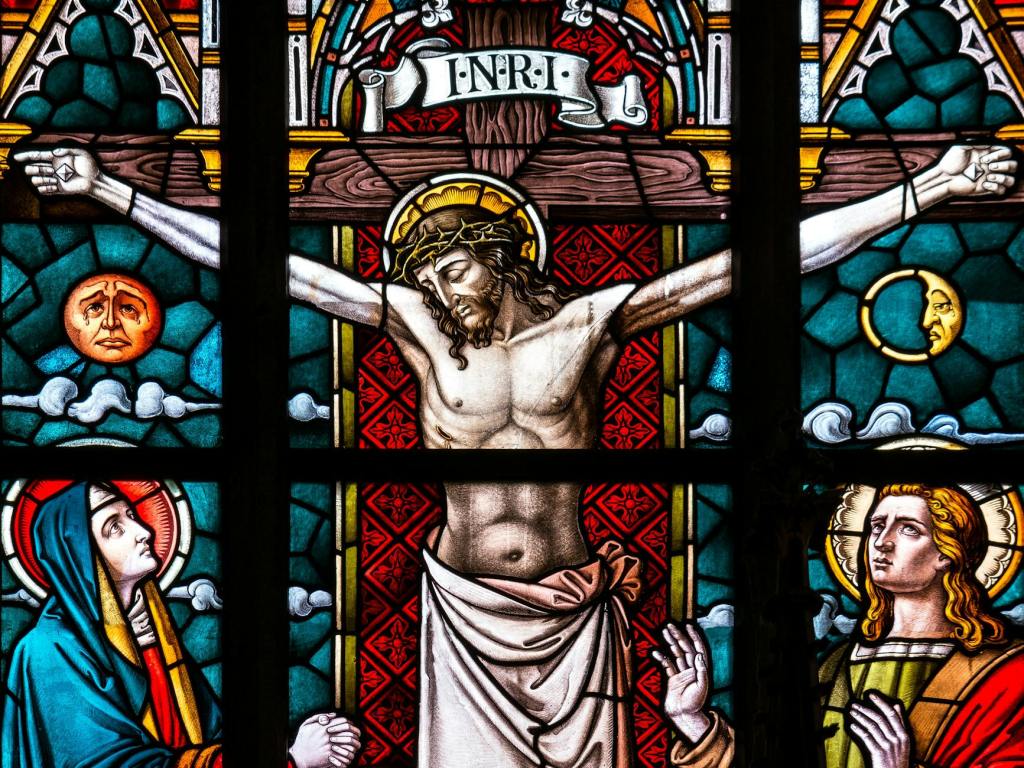
It is through Jesus’ resurrection that all will be made right. The ruler of this world will no longer have power over God’s children. In the song, In Christ Alone, there’s a line that says, “sin’s curse has lost its grip on me,” and that is what the resurrection achieved. The sin that keeps us trapped in delusion, and separate from God, is wiped away in Jesus’ victory on the cross. Through Jesus we are both blest and bless-ed in the here and now and we will be made complete when we join him in the kingdom.
And if he was raised up, which he most certainly was, then so will we be raised up. Because of him, we are being raised already, even now as we’re gathered here together. Sometimes it doesn’t feel like it, sometimes life wears us down, and our own shortcomings make us feel low and unworthy. But despite all this, we are being lifted up with Christ, being drawn up in a wave of bliss and wholeness, we are a part of his resurrection too. He made this promise to us and sealed it with his blood.
John sees this all too clearly as he writes in Revelation 21:4
“There will be no more death or mourning or crying or pain, for the old order of things has passed away.” The old order is the hankering after illusory and selfish goals, and the new order is one in which our hearts are centred on God, and love of brother and sister. The joy that we are promised in God’s kingdom will be indescribable, but only if we want it, only if we seek it and only if we work for it, and live for it every day of our lives on earth. We seek it even when things go wrong and there is pain and suffering, we nurture it despite the lack that we sometimes face.
Those who live in a bless-ed state in the here and now, who seek God’s love and who joyfully follow him will be blest with eternal contentment, joy, peace and love in his presence, amazingly even more so than they are already being blest by living in his love, day by day.
Let us pray that all will be called to embrace a bless-ed existence by realising God’s love in their lives, and to desire God above all things, through Jesus Christ our Lord,
Amen.



 Tell Out My Soul
Leave a comment