The message of Psalm 22
There’s a saying that we have that goes, “famous last words” and we usually say it when we think that something won’t go as expected, or when a statement is shown very soon, to be embarrassingly wrong. It’s like when your friend says, “I can totally finish this extra-large pizza by myself!” and you respond, “oh yeah, famous last words.” When it comes to people’s actual last words, it’s universal that we want to pay extra attention to them. It’s often important that we do remember these words, these are things that people really want to say to us before they go. These words are real and true. Hundreds of examples of the last words of famous people have been recorded. Sometimes these final phrases are inspired or deeply meaningful to us, or touching, sometimes they’re funny.
Wilson Mizner was best known for his witty sayings—including the line, “Be nice to people on the way up because you’ll meet the same people on the way down.” When Wilson was on his deathbed, a priest said, “I’m sure you want to talk to me.” Wilson told the priest, “Why should I talk to you? I’ve just been talking to your boss.” Often and naturally, in their last hours, people’s thoughts and feelings turn to God. The blues singer Bessie Smith died saying, “I’m going, but, I’m going in the name of the Lord.” And I remember the funeral of a neighbour and close friend. His daughter gave the eulogy, and she told the people gathered that one of the last things her dad said was, “oh, how I love the scriptures.” I don’t think I’ll ever forget that, Bob was a man of great faith and he was close to God right up until the end.
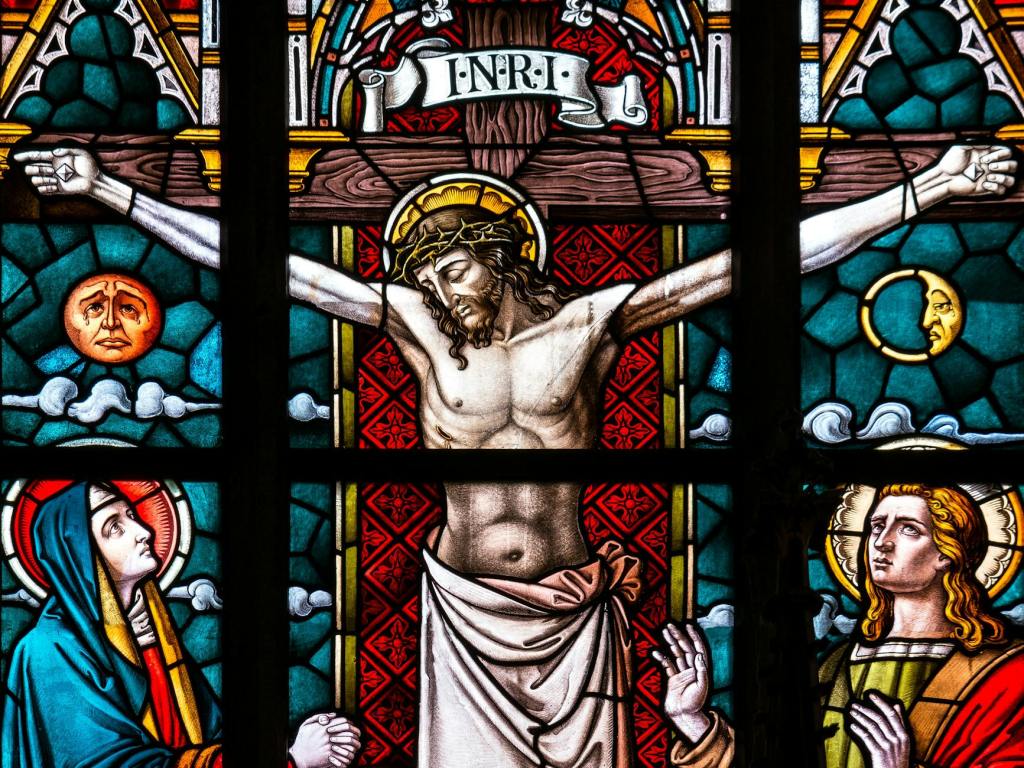
We know that our Lord’s thoughts were constantly on God during his life, and his thoughts were on God during his last moments too. But Jesus’ final words on the cross seemed to be a big contrast to the positive statements made by many of the faithful. Jesus’ last words were, “My God, my God, why have you forsaken me.”
It would be heart wrenching if we were to think that Jesus’ last moments were filled with feelings of desperation and abandonment. But we mustn’t think this, because that was not the case. Not at all. The clue to this is that he cried out these words in a loud voice, the gospel tells us so. He didn’t whisper them. We’re told that when some people heard this, they mocked him. Where is Elijah now? Where is God to help you? But there were others there, a group of women who were watching from a distance and it was to these women that Jesus was directing his final words. He needed to cry out in a loud voice so that they could hear him.
These women took care of Jesus and provided his meals when he was in Galilee, they were his support group. It’s hard to imagine their grief and sorrow. And I suppose they might have felt that God had abandoned Jesus, and left him to face this cruel and humiliating end. Jesus wanted to let them know that he had not been forsaken. His last words were designed to be words of comfort to his support group. These last words were like a code. The words “My God, my God, why have you forsaken me” are a direct quote from the beginning of King David’s psalm 22. Jesus is quoting this psalm to his followers, and they would have known this psalm very well. These words are a confirmation that God does not forsake or abandon his people. He’s saying, okay everyone, I know this situation is awful but you need to look past it and trust in God’s great love and care for his people. He’s telling them remember Psalm 22.
Jesus is saying that God the Father does not abandon you. The Father does not ignore you. Psalm 22 is an amazing psalm, full of intense emotion and touching poetry. The scenario the psalm paints at the beginning is a grim one, and it prophesies exactly what happens in the crucifixion, the kind of death Jesus suffers, the mocking of the crowd and the casting of lots for his clothing. But then it moves from the descriptions of suffering and despair to a glorious praising of God and his great love and loyalty to his people. It grows into an uplifting and positive message, not a negative one.
Towards the end of psalm 22 we read:
You who fear the Lord, praise him!
All you offspring of Jacob, glorify him;
stand in awe of him, all you offspring of Israel!
For he did not despise or abhor
the affliction of the afflicted;
he did not hide his face from me,
but heard when I cried to him.
The whole of this psalm needs to be read and understood to give Jesus’ last words their context and to convey the fullness of his message of love to us. God hears us when we call out to him.
When everything is going well, we’re grateful and full of thanksgiving. But when things are not going well, when there’s affliction and pain, and suffering that seems insurmountable, it’s not easy to feel grateful. It’s natural in some cases, especially in times of weakness, to feel abandoned. Suffering and pain can be isolating.
Sometimes it can feel that God is remote, up there in heaven and we’re kind of stuck here, marooned, far from home, left to our own devices to deal with the nasty and painful things that happen, not only to us but to those we care about. Does God really hear our prayers? When things go wrong, this is the question that often sets up a barrier between us and our heavenly Father, and many people use this question to justify their out and out rejection of God. They’re a lot like the mockers at the cross of Jesus, making jokes. The mockers tell us that it’s obvious that God’s not listening. But needing this kind of proof before one believes is a superstitious way of looking at God. This mindset is erroneous.
The idea that God is some kind of wish granter who makes problems and pain just magically disappear when we ask him to, is a naive and unrealistic viewpoint. This mentality is not far short of pagan rituals to bring a good harvest or to protect a person from bad luck. An underlying notion behind this kind of thinking is “what’s in it for me?” Is it worth believing in a God that doesn’t do everything I ask him to do? The Israelites fell into this trap when they were following Moses in the desert and they were going through some hard times; they lost faith in God. They turned away from Yahweh and reverted to sacrificing to the pagan god Baal and relying on superficial and meaningless practices to get what they wanted.
What frustrated Jesus during his ministry was the prevailing theory that the Jewish religious authorities had, that a person’s relationship to God was conditional. A barrier had been set up between God and the people, to gain God’s favour you had to make a sacrifice, and adopt behaviours that were proscribed by scripture, and all these requirements were written down. Much of it revolved around ritual cleanliness. If you made the appropriate sacrifices then you’d be acceptable to God, and it usually involved money or payment. The Temple had become a market place and the holy of holies was separated from the people by a thick veil. It was an actual cloth curtain arrangement that was placed in front of the tabernacle and people were forbidden to enter through it. It was like saying, God’s in here and you’re out there and you can’t come any closer.
What is really important to note here is that at the very moment of Jesus’ death on the cross, this veil was physically torn apart. Mark tells us, “Then Jesus gave a loud cry and breathed his last. And the curtain of the temple was torn in two, from top to bottom.”
Not only was this a physical event, it was a symbolic event too. The barrier was removed and it had been removed for all people. We can connect directly with the holy of holies, we can connect with God. Jesus, through becoming one with us, has opened the way for us to be one with the Father, and it’s totally unconditional.
In Hebrews it is written: “For we do not have a high priest who is unable to sympathize with our weaknesses, but we have one who in every respect has been tested as we are, yet without sin. Let us therefore approach the throne of grace with boldness, so that we may receive mercy and find grace to help in time of need.” Our Lord came down to earth to share our pain and suffering and we have Jesus himself as our great high priest, through his grace, binding us to God the Father. I’d like to share some words from Michael Ramsey, a former Archbishop of Canterbury and an inspirational theologian. He wrote, “What is called the intercession of Jesus means his ceaseless presence with the Father, not as begging the Father to be gracious, for from the Father graciousness ever flows. He is with the Father as one who bore our sins and our sufferings; with the Father as the focus of our hopes and desires.”
God hears our prayers when we ask for help, and through Jesus, we receive God’s mercy, and we find grace to help in time of trouble. Jesus is there at God’s right hand as our representative, eternally in God’s presence on our behalf. Just as God did not forsake his son, Jesus does not forsake us. This is the message that Jesus gave us with his last shred of energy and with his dying breath. It was a message of comfort and faith, and total trust; we’re not alone and God hears our prayers. Jesus is forever with us as our high priest, our brother, and the one who sits at the right hand of God the Father. And no matter what we’re going through, and no matter what the mockers say, we must hold on to the fact that God will always turn to us when we call on him, full of mercy and grace, and boundless love.
I’d like to close with a few words that we should keep close to our hearts, especially in tough times. Verse 10 from Psalm 22.
On you I was cast from my birth,
and ever since my mother bore me, you have been my God.
Amen.




 Tell Out My Soul
Leave a comment