
Matthew 10:24-39
This morning I find myself in a slightly challenging situation because today’s reading from Matthew is a bit of a tough one. It’s a hard message, full of powerful and disturbing imagery.
There’s so much in this passage that a person can talk about and this is so typical of the gospels in general. They are so rich, each paragraph is loaded with meaning for us today. Nothing is redundant. How blessed are we that the evangelists and the other gospel authors wrote it all down for us and that these precious writings have been preserved and protected down through the generations.
While there’s a lot that I can talk about in this reading from Matthew I’d like to focus on just one message because I think it’s especially relevant to what we see happening around us today. The part of this reading I’d like to talk about is summarised by a well known saying, and that is, “it’s always darkest just before the dawn.” The person who first came up with this proverb was Thomas Fuller, an English theologian, in 1650. It means that the night sky is blackest just before the sun peeps up over the horizon. It’s a way of saying that sometimes things get bad before they get better.
This reading is part of a set of instructions and warnings that Jesus gave to the Apostles before sending them out on their mission to preach the good news. And he didn’t sugar coat the information; he told them exactly what to expect and it wasn’t going to be a picnic. Jesus had so many things to tell them and not much time to do it in. This reading is intense. I’m sure the Apostles would have realised how dramatic and powerful their mission was going to be and how much danger they were heading into.
Jesus was giving them a crash course in radical discipleship, and it was really important that they remembered what he had to tell them. Their safety was depending on how well prepared they were going to be. So there’s a lot of deliberate shock value in these passages, because, really, if Jesus didn’t come on strong, then it would most likely go in one ear and out the other.
Jesus uses a language technique that we see with many of our common sayings that we hear today. There’s one that quickly comes to my mind that says “ulcers don’t come from what you eat, they come from what’s eating you.” There’s a turnaround in meaning, a reversal, an idea and its opposite. These reversals grab our attention and make the sayings easy to remember. Jesus uses these reversals too. He says, “What is whispered in your ear, proclaim from the roofs, what I tell you in the dark, speak in the daylight” and “whoever loses their life for my sake will find it.” Whispering, proclaiming… darkness, daylight… losing, finding… And so on. Jesus wanted these sayings to be remembered. He wants us to remember them.
Not everyone was going to accept Jesus’ message… and there were people out there who would actively oppose it and so those who believed in the one true God and Christ as his only son would be in danger. This is what Jesus meant when he said, “Do not suppose that I have come to bring peace to the earth. I did not come to bring peace, but a sword. For I have come to turn a man against his father, a daughter against her mother,a daughter-in-law against her mother-in=law. A man’s enemies will be the members of his own household.”
This seems harsh and totally out of character for Jesus. We know that he preached peace, love and understanding, so what are we supposed to make of these words? But when he talks about the disruption of the family, and a man’s enemies being from his own household, these are not Jesus’ words, he’s actually quoting directly from the prophet Micah. Micah prophesied seven hundred years before Jesus, and it was a time of moral corruption and deceit and betrayal. Society at that time was degenerating. But Micah’s answer was this, he said, “But as for me, I will look to the Lord, I will wait for the God of my salvation; my God will hear me.” Micah was prophesying the coming of the Lord.
By quoting Micah, Jesus was saying to his disciples that, yes, salvation was coming and he was going to bring it. Jesus’ death and resurrection, bringing life and justice to the world, fulfills Micah’s prophesy. Jesus is saying, don’t worry, I’m here now and everything is going to be OK. But before it’s OK, there’s going to have to be a time of trouble. There’s going to be darkness before the dawn.
It wasn’t Jesus’ intention to bring strife and division, but he realised that his coming would result in conflict, it was inevitable… but Jesus’ message had to be spread and the new covenant had to be made. Because without it, the human race would be lost.
Many would be opposed to Jesus’ teachings, and they’re still opposed. Persecution, violence and antagonism towards Christians is happening in the world today. We have a friend. For several years he’s been involved with the establishment of a Christian mission in India, mainly to shelter and care for street kids and orphans, to take these abandoned children off the streets and out of danger. He visits India regularly and we’re always concerned for him because, even in this modern age, people who are involved with this mission and work at the orphanage are in danger of violence and even death at the hands of those people who do not want Christians doing this kind of work in their country.
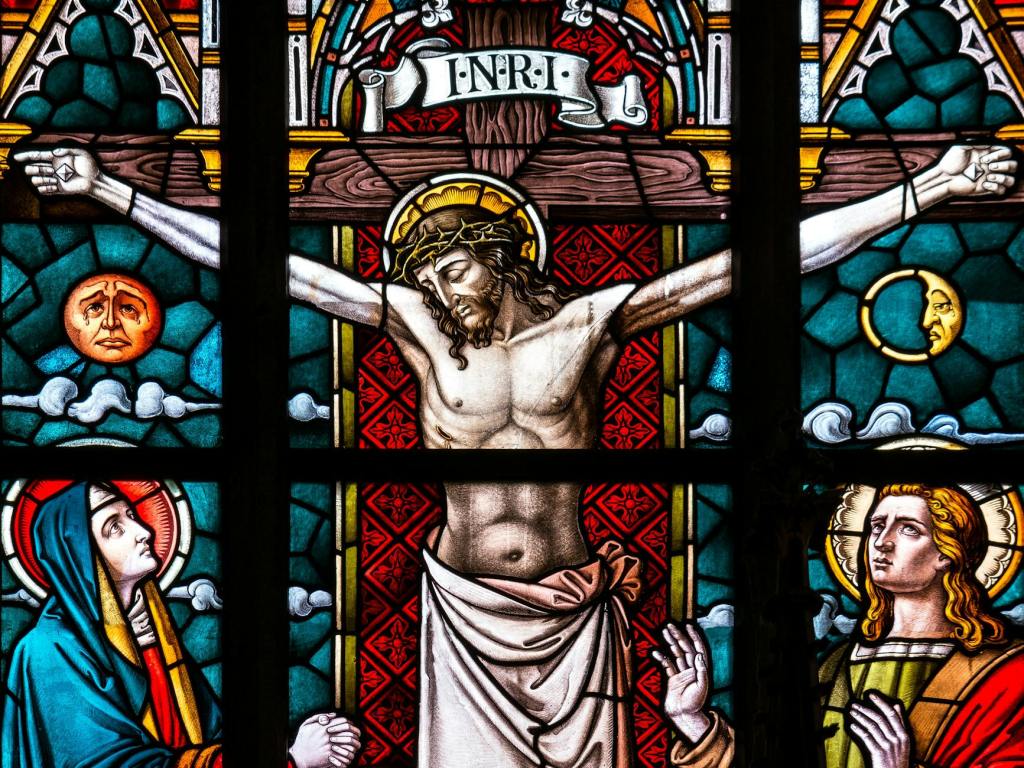
There is darkness before the dawn, and the dawn is the resurrection of our Lord. It even happened symbolically on the day he was crucified. At the time of his death, it was just 3 o’clock in the afternoon but the land was thrown into darkness… and three days later, there was dazzling light when he rose from the tomb.
Some refer to this dark time as the time of trial. But it is by going through tribulation that the path is open for the coming of the light, for God’s saving grace to operate, not just in our lives as individuals but in the whole human race. We as Christians, live out this reality on a daily basis. We are witnesses to the trouble in the world but we are also witnesses to Jesus’ redemptive force; he will deliver us from the time of trial.
The overriding message Jesus gives the Apostles, and us, is “do not be afraid.” He repeats it three times in this passage alone. It’s been noted that the phrase “fear not,” or something similar appears 365 times in the Bible, one for each day of the year. It’s a nice idea but it’s not really true. It’s actually said about 100 times in the old testament and 44 times in the new testament. That’s still a lot of times. So for something to be repeated that many times, how can we not take that on board?
Jesus really underlines the great love and care that God the Father has for us. He cares for us, not just as a group, but as individuals, each of you in particular are in God’s special care. And in this reading, Jesus uses the beautiful explanation about the sparrows. These little birds could be purchased two for a penny in the temple, they’re common, there’s hundreds of them. But one sparrow doesn’t fall that God doesn’t know about it. And if God cares about a lowly teeny weeny sparrow, how much more does he care for each one of us. Because God loves us so much there’s no need for us to be afraid. He won’t let any harm come to us.
We need to trust fully and completely that this is the case. Do not be afraid, all will be well. Nothing can touch our immortal souls. In this reading from Matthew, Jesus wants us to know, without any doubt, that everything will be alright, that after the dark night of the soul and after the tribulation of human experience, there will be peace and healing through him, who is eternal love and care. He holds us as carefully in his hands, as we would hold a little sparrow.
Amen




 Tell Out My Soul
Leave a comment